




While bearings are relatively small components, their failure can have an outsized impact on food processing operations. One simple failure can bring your operation to a halt. You have to throw out the batch, clean everything again, and possibly miss important deadlines, all of which is costly. Engineers, managers, and procurement teams alike understand just how valuable corrosion-resistant bearings are. In the food processing industry, you’ll find them in everything from conveyors to fillers to packaging lines, and they’re designed to handle moisture, washdowns, and extreme temperatures.
Selecting bearings that are properly specified for washdown, temperature, and load requirements can help reduce unplanned downtime and extend equipment service life. Knowing which bearings you need and where you can get them is the key to meeting these goals.
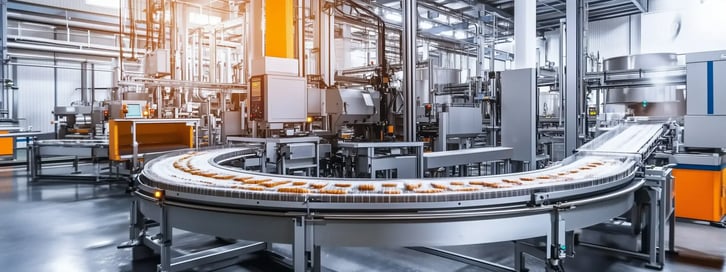
Why Bearings Matter in Food Processing Equipment
Bearings as motion components in food processing equipment face harsh washdown practices, moisture, and high temperatures every day.
- Hygiene requirements: Food processing equipment is regularly washed and sanitized as part of routine sanitation cycles. The bearings in these systems must remain sealed and clean with absolutely no buildup of any kind.
- Exposure to moisture and chemicals: The cleaning processes used are tough on bearings with the consistent use of water, steam, and cleaning agents. All of this can wear down seals, wash out lubrication, and trigger corrosion.
- Downtime risk: Bearing failure leads to downtime, resulting in lost time and money.
Corrosion-Resistant Bearings: Ensuring Long-Term Reliability
Bearings designed for corrosion resistance can help extend service life and reduce downtime when properly matched to the operating environment.
Stainless Steel versus Polymer Bearings
Stainless steel bearings are highly durable and resistant to corrosion and heat. They are typically heavier and require lubrication, making them well-suited for higher-speed or higher-load applications where strength and temperature resistance are required.
Polymer bearings are often self-lubricating and can be a cost-effective option in certain washdown or low-load applications. They’re lightweight and resistant to chemicals and corrosion, which makes them ideal for the food industry, but they’re softer and can deform when exposed to extreme heat or pressure. They work great in washdown areas and in low-speed, low-load operations.
Linear and Ball Variants
These bearings are commonly used in conveying, packaging, and processing equipment. Both types use food-grade stainless steel and must be able to withstand frequent washdowns.
- Ball bearings: Often used in conveyors, gearboxes, mixers, packaging machines, and pumps. They support axial and radial loads.
- Linear bearings: They’re used to control precision movements in conveyor systems, robotic arms, slides, and weighing equipment.
Washdown Bearings
These are specialized bearings made from stainless steel or polymer, and built to withstand high-pressure cleaning with water and chemicals, helping support hygienic operation and reduce contamination risk. They have to operate under extreme repeated thermal cycling, where they go from high-temperature cooking to freezing cold temperatures.
High-Temperature Bearings
These bearings are used in baking, frying, dehydrating, and sterilizing equipment like dryers, fryers, and ovens. These bearings are commonly sourced in materials such as ceramics, graphite alloys, or high-temperature stainless steel, depending on the application.
Selecting the Right Bearing Partner for Food-Grade Applications
The right bearing partner can make all the difference in your operations.
- Quality: The supplier should offer consistent product quality backed by reputable manufacturers and documented specifications.
- Certifications: They should be able to prove compliance with all food safety standards, like FDA, HACCP, and ISO 22000.
- Expertise: They should provide excellent technical support to help you choose the right bearing and lubrication for your specific operations. Application support and access to hard-to-find or obsolete bearings are especially important in food processing environments where downtime is costly.
Conclusion: Reliable Bearings for Safe, Efficient Food Processing
Reliable, well-constructed bearings are vital in the food industry because they prevent contamination, guarantee hygiene, and keep operations running smoothly by minimizing expensive downtime. When properly specified, these bearings are designed to support compliance with FDA and USDA sanitation requirements.
Emerson Bearing offers a selection of bearings designed specifically for the food processing industry, including hard-to-find or obsolete parts. We also develop custom bearings as well as source unique components for any specialized applications. Emerson has both the expertise and connections to help you find the right components to keep your operations safe, compliant, and running smoothly. Contact us today to discuss your specific needs or request a quote.


